
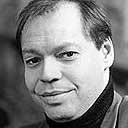
"Don't go!" Thomas Quasthoff shouted after his first encore to the back of a departing punter's head. "You never know what you'll miss!" He had a point. The German bass-baritone's three encores - two Schubert favourites and a honeyed account of Danny Boy that brought out the audience's handkerchiefs - held no great surprises, yet it would have been a shame indeed to lose out on hearing such well-loved pieces sung so beautifully.
It seemed that on familiar ground Quasthoff was at his most relaxed and expressive, reaching a level of communication that he had attained only intermittently in the first half of the programme, which consisted entirely of slightly less-known Schubert songs, despite his loving enunciation of the texts. Yet there was ample opportunity to revel in the mellifluous warmth of his singing right from the start. The first song, Sehnsucht, opened up the higher reaches of his voice, Quasthoff floating the topmost notes with gentle delicacy. The second, De Wanderer an den Mond, reminded us of the richness of his deeper notes. He had some wide, slow leaps to negotiate in the melody of Im Frühling. Initially he tended to smudge them a little; later, when he hit the note spot on, the effect of his finely shaped phrasing was enthralling.
Singing from a score, Quasthoff still managed to keep eye contact with the audience (though the encores demonstrated that without the book he is even better), and he glowered over the pages as he described a relentless horse ride in Auf der Bruck. This was where Justus Zeyen's piano playing began really to take flight. Earlier songs had found him getting a little bogged down in Schubert's relentless figuration, but here the repeated chords seemed alive and the bass line skipped from phrase to phrase.
The second half comprised five ballad poems in vivid settings by Carl Loewe, a little-performed yet deserving contemporary of Schubert. Easily the darkest and most dramatic was Edward, in which a man confesses parricide to his mother before snarlingly blaming it all on her. The silliest was Tom der Reimer, the elfin bells evoked by the piano sounding for all the world like a twee Tyrolean carillon. Whether because of the novelty of the songs or their graphically told stories, both musicians seemed to let go a bit. Quasthoff, who had previously just sounded like a fine singer, emerged as the compelling performer he really is.
