
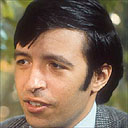
The menace of the mobile phone struck Murray Perahia's Royal Festival Hall recital with devastating consequences. It's a Sod's law of contemporary concert-going that phones will ring during the quietest moments and shatter the most profound concentration. But instead of a brief electronic interruption, Perahia was treated to the sustained counterpoint of one phone for the first five minutes of Schubert's B flat major piano sonata. It's difficult to know what concert halls can do to combat these appalling accidents, short of confiscating all phones and throwing them into a deep pit.
It is testament to the greatness of Perahia's interpretation of Schubert's last sonata - and to the fact that he observed the repeat in the first movement - that he was still able to draw the audience into his performance. His control of colour and structure in the first movement was breathtaking. He turned the low, rumbling trills that punctuate the opening theme into violent, seismic events. It was as if the surface of the music was always in danger of being ruptured by this rogue element. The whole movement projected this sense of tension and ambiguity. But when the opening music returned, the low-register rumbles had become less menacing. Perahia's performance had resolved the enormous contrasts of Schubert's vast structure.
He was no less impressive in the other movements. The slow movement was an oasis of calm and coolness in which he wove a series of seamless lines. After the massive scale of the opening movements, the scherzo and finale were brilliant, playful performances. He emphasised the weird rhythms in the scherzo's middle section and relished the finale's false starts and unexpected harmonies.
If his Schubert was full of drama and diversity, Perahia's performance of Mozart's C minor Fantasia was superbly integrated. He dramatised the volatile surface of the music with flair, but also made a case for this piece as more than the sum of its improvisational parts. He created the sense of a single line running through the music's unpredictable changes of character and key.
He brought the same lucidity and objectivity to his selection of Chopin in the second half. The Third Ballade and B flat minor Scherzo were superbly balanced between virtuosity and clarity, but the flamboyant Op 25 Etudes were less suited to his studied approach.
