
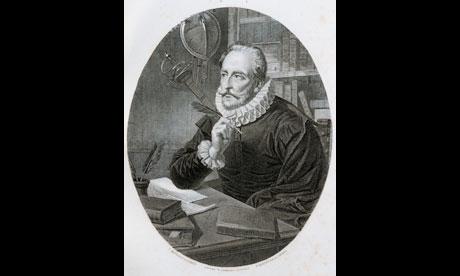
Four hundred years ago, Cervantes chose the torrid plains and dusty villages of southern central Spain as the setting of his novel Don Quixote of La Mancha.
Beneath the punishing sun, the romantic imagination of the mad hidalgo transformed windmills into giants, humble inns into castles and homely matrons into beautiful damsels.
To mark the 400th anniversary of the novel's publication, the provincial government of this poor, rural land is trying to transform its literary legacy into gold. In true quixotic spirit, officials of Castilla-La Mancha have invested €40m (£26.5m) in a network of "ecological tourism routes" that trace the knight errant's misadventures in La Mancha.
The trails - designed for hikers, bikers or those who prefer to gallop like Don Quixote on his scrawny Rocinante - cover about 2,500km (1,500 miles) of rolling hills, woods and streams from Toledo to Cuenca.
They pass through 146 cities and towns, many of them mentioned in Cervantes' novel. El Toboso, for example, is the birthplace of Don Quixote's beloved Dulcinea. They also lead to dozens of ancient windmills at Campo de Criptana, reputedly the place where the brave knight tilted at the supposed "giants".
The tourist trail is the latest symptom of the Don Quixote fever raging through the country on the 400th anniversary. It is difficult to find a play, concert or exhibition this summer that does not make reference to the deluded knight and his faithful squire, Sancho Panza.
For a sparsely populated region of 1.7 million people, €40m might seem a lot of money to spend on planting trees, build ing parking lots and refurbishing ancient trails blazed by shepherds and their sheep.
But like the chivalrous knight, the minister of economy, María Luisa Araújo, entertains lofty ambitions. She said the route was a magnet for investment by hotels, restaurants and other tourist services such as agencies specialising in adventure sports (which hopefully will not include drubbings by innkeepers and other Quixote-style activities).
Investment was needed, she said, to stimulate the mostly agrarian economy as it faced impending cuts in Spain's share of European Union funding. EU money makes up roughly 4% of the region's budget.
"With time, we aspire to have the same importance as the Way of Saint James [the pilgrim route to Santiago de Compostela]," said Juan Cámara, project director, who was leading a tour of traditional windmills in the village of Consuegra. In honour of the anniversary, the squat mills are once again grinding flour.
So far, the meagre income from tourism in the region has doubled from 4.6% to 10% of total revenue. But attracting tourists to this forgotten corner of Spain will be a tough battle worthy of that skinny, bearded hidalgo.
Some Spaniards have not read the book. "I have it in comic form, it's easier," said José Sánchez Pérez, 29, when his girlfriend admitted she "never felt inspired to read it".
And some foreigners had not even heard of Don Quixote, let alone Castilla-La Mancha.
"I saw the musical in New York," said an American tourist, Kristin Froebel, 22, at a Madrid cafe. Her friends shot her quizzical looks. "The Man of La Mancha," she explained, but they still had not heard of it.
