
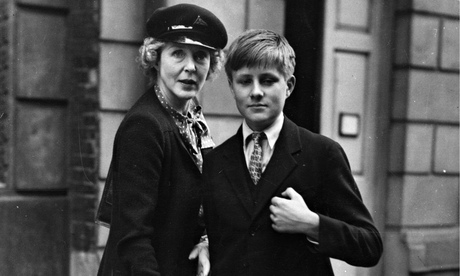
This collection of letters from Lady Diana Cooper to her son John Julius, the “Darling Monster” of the title, is an absolute treat. Spanning the period 1939 to 1952, Diana’s missives, full of anecdotes and riveting society gossip, entertain and move in equal measure.
Daughter not of her official father, the Duke of Rutland, but of Henry Cust, the womanising MP her duchess mother had a long affair with, Diana married Duff Cooper, another MP and “comparative pauper”, in 1919. Although the marriage largely defined Diana’s life – she was a poster girl for the war effort, by her husband’s side during his tour of the far east, and as the ambassador’s wife in postwar Paris – her son is at pains to highlight her earlier career on stage and the silent screen which gave her a taste of “other worlds totally foreign to her own”.
These letters exist because John Julius was sent away to be schooled in Canada while his parents were in the civilian and political front line. While Duff was minister of information in Churchill’s cabinet, the family took rooms on the top floor of the Dorchester (a stroke of luck: their Bloomsbury house was “thoroughly gutted” during the blitz).
So while Diana’s letters are often as intimate as diaries, they should also be viewed through the prism of a mother-son relationship. “It was quite untrue [that the Dorchester was bombed],” she reassures Julius. “We’ve only had an incendiary bomb which… landed on the roof and [was] dealt with by the lookout man immediately… incendiaries don’t count if there is someone there to bury them in sand.” Or when a bomb fell “only 20 yards from me in the canteen,” she writes lightly, “I didn’t half jump.”
Flitting through these pages are Laurence Olivier, Vivien Leigh, Cecil Beaton (glimpsed in their dressing gowns), Evelyn Waugh, the Duke and Duchess of Windsor. Churchill in overalls is “the good pig who built his house of bricks”.
While Darling Monster is a showcase of Diana’s debonair wit, it is also a unique chronicle of wartime Britain. Her vivid descriptions, the sense of bravery in the face of impending doom, make these letters the kind of primary source material historians drool over.
Darling Monster is published by Chatto & Windus (£10.99). Click here to buy it for £8
