
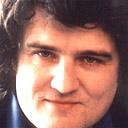
Karl Amadeus Hartmann (1905-1963) links the two halves of 20th-century German music, making his works hard to pigeonhole. He has struggled to gain the recognition he deserves, but that is starting to change, in large part thanks to the efforts of the conductor Ingo Metzmacher, who has made fine recordings of the eight symphonies that are the core of Hartmann's achievement.
Metzmacher made his debut with the London Symphony Orchestra at the Barbican on Wednesday. He announced himself with a Hartmann symphony, the Fifth, called Symphonie Concertante and completed in 1950. Like so many of Hartmann's immediately postwar works it is based on a score he wrote in the 1930s, when he withdrew from German musical life in protest against the rise of the Nazis.
The traces of that earlier piece, a concerto for trumpet and wind, remain: the symphony is scored for wind instruments (with prominent parts for trumpets) and a string section of just cellos and basses. It is one of the most concise of Hartmann's symphonies, but in some ways not particularly characteristic - the music is neoclassical in a Stravinskian way, brittle and jaunty when so many of his best works are brooding, chromatic and introspective. The debt to Stravinsky is made very clear in the central slow movement, which is based entirely on the opening bassoon solo from The Rite of Spring, subtly skewed.
When played with the kind of panache Metzmacher and a cut-down LSO found in it here, though, it makes a fresh, bracing start to a concert; and the ends were neatly tied together by the The Rite of Spring, which closed the programme. It was a slightly curious account of the greatest of all 20th-century orchestral works, very calculated and almost over-precise in the opening exchanges but gradually acquiring power and finally massive weight; the orchestral playing was immaculate.
In between came Beethoven's Triple Concerto, with a distinguished trio of soloists. It was a fine, insightful performance, but not even the combined effect of Leonidas Kavakos's refined violin playing, cellist Steven Isserlis's Tiggerish enthusiasm and the aristocratic poise and crystalline tone of Stephen Hough's piano-playing was persuasive enough to suppress the thought that, had the Triple Concerto been written by Hummel or Spohr, say, rather than their greatest contemporary, it would have been almost entirely forgotten.
