
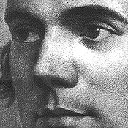
Robert Burns was the poet of penury, as much as of life and liberty. His adult years were spent failing in one enterprise or another, and he was reduced on several occasions to patrons who, he hoped (vainly), would subsidise his writing. When the flax-dressing shop in which he tried to make a living burned down in 1782, Burns wrote that he was left "like a true poet, not worth sixpence". He was seldom worth much more during the 14 years remaining, until his death at 37.
The Burns cottage and museum at Alloway, Ayrshire, has less than sixpence. It is in need of £3m to continue preserving the immortal memory. The chances are that few pledges of donations were heard during the countless Burns suppers that took place last night, up and down the land.
A majority of the celebrants have probably never visited the whitewashed, thatched cottage which Burns's father built himself, and where the poet spent his first seven years. A quarter of a century ago, Hugh MacDiarmid railed against the "Burns cult", which adores Burns suppers but practically ignores Burns, and things haven't changed much.
The Burns cottage has the bad luck to be off the modern Scottish tourist trail. It is only about 50 miles from Glasgow, via train and bus, but most visitors land in Edinburgh, on the other side of the country. Robert Louis Stevenson is easily located there, in several different houses, as is Sir Walter Scott, who also welcomes tourists to his accessible Borders pile, Abbotsford. Edinburgh was not fertile ground for Burns, just another place of failure. The ploughman poet's happy memories were rooted in Mauchline, Mossgiel, Tarbolton, Ayr and, of course, Alloway.
Burns has been adopted throughout the world as the champion of the common people, of universal brotherhood and so on, but it is less often remarked how much he is a poet of his own neighbourhood. The poetry is full of references to the local countryside and the villages round about. "The rising moon began to glowr/ The distant Cumnock hills out-owre . . ." Local characters turn up in his poetry under their own names more often than archetypes such as Holy Willie. Among those whom the latter asks the Lord to look severely on is Gavin Hamilton, Burns's friend and the dedicatee of the Kilmarnock edition of the poems, who "drinks, an' swears, an' plays at carts" - more the style of Burns himself than vengeful prayer.
Tam o' Shanter, his greatest poem and one of the greatest long poems in any variant of English, begins in the local tavern, and unfolds over nearby "mosses, waters, slaps and styles", which are suddenly not what they seemed. Everybody sympathises with the "Wee, sleekit, cowrin', tim'rous beastie", but the poor thing trembles more visibly for our knowledge that a real farmer, Burns, turned up a real mouse with his plough in a real field. It must have been very close to the site of the Burns museum.
Altogether, Burns feels like someone we know, more than most poets. We may admire Pope or Wordsworth every bit as much, but we enjoy an evening "bousin' at the nappy,/ An' gettin' fou an' unco happy" with only one of them. Outsiders might have the impression of unwavering devotion to Burns within Scotland. This is both the case and not the case. Burns is an emblem for Scots; he is famous abroad; he makes a fine model for statues, and a handsome head for shortbread tins. It's a grand thing to raise a glass to his spirit on January 25. But the truth is that, apart from a few obvious poems, the Scots dialect and local references make Burns difficult for many readers.
No other poet can have such popularity among people who have read so little of his poetry. The line of Burns that everybody knows - "Should auld acquaintance be forgot" - was not written by him. It occurs in songs that were being sung half a century before Burns's birth, as does the phrase "lang syne". This reflects no discredit on Burns. On the contrary, it ought to increase our admiration for him, as not only a great poet and songwriter but a collector of fading lyrics as well.
Burns's public image has had several phases: the "heaven-inspired Poet" (his own description); the dangerous radical (at the end of his life, as the clouds of revolution gathered); the liberty-loving saint (as the clouds cleared) ; the irrepressible seducer who believes his own rose-scented phrases (ie, lies); and of course the drinker. The real man contained all of them.
The first biographers who offered warts-and-all accounts, such as Catherine Carswell, whose excellent, novelistic Life of Robert Burns appeared in 1930, were challenged, and in Carswell's case physically threatened, by the older school, who wished to preserve his flimsy sainthood. We have less need now to separate the various strands.
The likelihood is that, from the start, Scots have esteemed Burns precisely because of his public presentation of light and dark natures. He was undoubtedly a decent man, but he could not conceal the demons behind his civilised front. Just as the pleasant Ayrshire countryside in Tam o' Shanter can erupt after dark in a dance of "warlocks and witches", with auld Nick himself looking on ("in shape o' beastie"), so the heaven-inspired poet is dogged by unwanted "ghaists and houlets". Burns's plough is perpetually turning up the pagan world, as it strives to cut an honest Christian living from unfriendly soil. His willingness to display the whole lot in his poetry is what has fixed it, and him, in the literary firmament.
The curator of the Burns cottage and museum was not taking calls from the press this week - "There have been so many misreportings" - and was directing inquiries to something called "the Tam o' Shanter Experience" instead. That sounds like a ghaist if ever there was one. The shrewdest guesswork says that the saints (in the form of the National Lottery) will save the shrine.
