
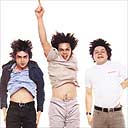
For Supergrass, babies of Britpop, cheeky chappies of the charts, growing up has been a very public thing. They've personified the exuberance of youth and worked through the angst of adulthood. And now they've decided to become Wings with attitude.
The last, self-titled Supergrass album was released in 1999 and sounded like the morning after the night before, the mood one of introspection, the lyrics full of hints that depression and dissatisfaction lurked beneath the happy-go-lucky, slightly spacey facade.
Only Pumping On Your Stereo retained the zest that set Supergrass apart from their peers and - as the stage turns into a disco of red and orange lights, bristling bass and hand-clap drums - it sparkles like a diamond in a haze of 1970s guitar riffs and prog-rock aspirations.
But Gaz Coombes, always the most personable of pop stars, is in good spirits. "Hello, boys and girls," he grins; his lambchop sideburns have been trimmed, but there's a hint of dandy remaining thanks to his crushed velvet suit.
Charismatic and eager, Coombes looks as if he was born with a guitar wrapped around him, his eyes watching his fingers find the largely moody chords as his lips pucker up.
His litheness is in contrast to the intensity of bassist Mick Quinn, head down and serious, nodding dangerously. Coombes launches into the haunting beginning of Moving, and they all come together for perfect harmonies, adding a sinister undercurrent to the nursery rhyme melody of Mary, and drama to the adrenaline-fuelled teen anthem Caught By the Fuzz.
Supergrass are adept and professional but, as each well-polished, well-executed key change rolls by, there's little to get excited about. The guitar-pop landscape has changed; although new songs nestle comfortably next to old favourites Lenny and Lose It, it's difficult to get involved with them. Crisp, edgy guitars adorn Grace, all playfulness replaced by an earnestness made clear by the notable absence of sugary thrill Alright.
For Rush Hour Soul, Coombes's voice is a nervy yelp as power chords flood around. Rob Coombes's subtle keyboards are lost as the drums get faster, the guitars attempting to hang onto the melody. It's impressive - but somehow still a strangely empty experience.
