
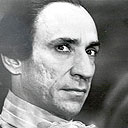
Surely it cannot be a quarter of a century since Peter Shaffer's Amadeus opened at the National Theatre? But it is indeed something like that. The play enjoyed a great international success, a film followed, and the story of Mozart and Salieri (a theme first dramatised by Pushkin, whose words were set to music by Rimsky-Korsakov) lodged itself in public consciousness.
If I refer to some artist as a Salieri figure, it will be taken to mean someone envious, destructive and second-rate. Mozart in the play was the genius who acted, as it were, as a conduit for divine inspiration. Salieri was enough of a musician to recognise this, to be mortified at his own indifferent qualities as a composer. Vengefulness and rivalry had their way.
Myself, I detested the piece and said so on more than one occasion, but disliked it more (at least as far as I remember) for its corniness and for what it said about Mozart than for the way it portrayed his then obscure rival. Anyway it was a work of fiction. The playwright was not on oath when he wrote it. Salieri was dead and could not sue.
But still there is a certain piquancy in the fact that Cecilia Bartoli has brought out "The Salieri Album" - a collection of arias from Salieri's operas, works found in the Vienna archives, dusted down and presented here afresh. And presented here, not as something that might possibly be of interest to a handful of buffs, but in the reasonable expectation of popular success (as a sequel to admirable and highly popular albums of Vivaldi and Gluck).
Tastes change, and seem to me to have changed faster and more dramatically in music than in literature or the visual arts. Still it came as a surprise to open the album and find it illustrated with chaste, elegant details of sculptures by Canova, Salieri's almost exact contemporary (Antonio Salieri was born in 1750 and died in 1825), and to read the tribute of Mozart's librettist, Lorenzo da Ponte, to "the great maestro Salieri, a man I truly liked and respected - not just because I owed him a debt of gratitude. I spent many happy and scholarly hours with him, and for six years he was not merely a friend but a brother to me."
In fact more than 20 recordings of Salieri works have been made since Amadeus was first produced, and you could almost argue that Shaffer stimulated interest in the composer. But that result was inadvertent. For the original production, the music department at the National had to come up with some banal bars of Salieri's music, to fit a text in which the embittered rival compares his own work with that of Mozart and finds it grossly deficient.
This, I am told, they had some difficulty in doing, because everything they looked at by Salieri seemed rather good. And you may remember a scene in which Mozart transforms a piece by Salieri into one of his own - all that transformation had to be done "in house", and the composer who did it, Kevin Leeman, was not very satisfied with the result.
But the great division between the way in which Amadeus was written and that in which "The Salieri Album" was researched and performed is one of attitude. Do we go to Mozart in the hopes of finding a divine composer so exceptional that all his contemporaries are simply left standing at the starting-point? Or are we interested in Mozart (pre-eminent though we grant him to be) as a figure in history, who had contemporaries, predecessors, successors, and whose rivals might even have had some reason to think that they were not utterly unworthy, that they might even, on occasion, be able to give him a run for his money?
If the former, we don't even want the research to begin, because all we want to know is Mozart. But if we take the latter attitude, we have this extra bonus: that the more we become familiar with Mozart's contemporaries, the more we can expect to understand about Mozart. It may be that we lose something, in comparison with previous generations of listeners, in abandoning this narrow focus on a limited number of great names.
What we must certainly lose is an illusion that, as listeners, as amateurs, we have mastered the subject, because we are familiar with the old canon (if we are). Instead we know that we cannot possibly have begun to master the subject, because there is so much more out there to be discovered. For instance, I see that in addition to his opera Falstaff, of which I am proud possessor of a recording, Salieri wrote in 1788 a Cublai, gran kan de Tartari. Has anyone checked this out as a source for Coleridge's poem? Could Salieri have made an unrecorded visit to England? Could he have been none other than the Person from Porlock? Surely this sounds like another subject for a play.
