
Atom Egoyan, the Canadian-Armenian film-maker, says that his new film is a "meditation on the spiritual role of art in the process of struggling for meaning and redemption in the aftermath of genocide". Ararat, clearly a deeply personal film, takes as its subject the wholesale massacre of Armenians by the Turks in Ottoman Turkey during the first world war. The massacre is denied by the present-day Republic of Turkey, but there is no doubt that something terrible did take place, and that relations between the two nations are still strained today.
Although it includes themes from his previous films, Ararat is a work quite unlike anything else Egoyan has attempted. Unfortunately, he attempts too much, and stumbles with script, acting and an overcomplicated structure. The film lacks his usual certainty and often seems both incoherent and unsatisfactory.
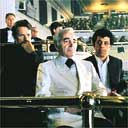
It is partly a historical re-enactment: Charles Aznavour plays a well-known Armenian director making a film based on a book called An American Physician in Turkey, which depicts the siege of Van that precipitated the massacre of 1915. The rest of the film looks at the lives of two families, at the centre of which are an 18-year-old boy (David Alpay) and a customs official on the verge of retirement (Christopher Plummer).
The boy, an Armenian, returns to Canada from Turkey with cans of 35mm film and digital tapes. The customs official is sure he is concealing something. According to the boy, the cans contain additional material of a film to be made in Toronto, but the official learns that the film is already completed, and an intense psychological examination begins. We learn that his mother is an art historian specialising in the work of the great Armenian expressionist Arshile Gorky, who committed suicide. There are many other complications.
Obviously, the film is meant to be taken on several different levels. It is a dramatised piece of history, an examination of how art can reflect such history, and a probe into personal relationships affected by past tragedies. Given the palpable sincerity behind the enterprise, one wishes one could say that the mix works better. Too often it is confusing and ponderously dramatised. There are good moments, most of them supplied by Plummer. But the "ancient terrain of lies, deception, denial, fact and fears" of which Egoyan speaks only occasionally comes alive. We are left to reflect on what might have been rather than what is actually on the screen.
