
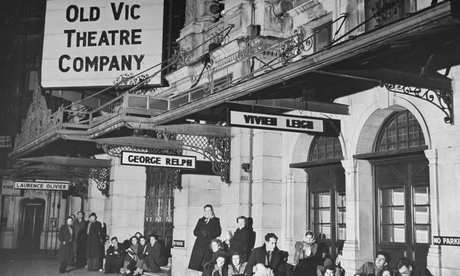
This splendid history of the Old Vic can be read, from curtain-up, as an extended drama. It will depend on your temperament whether you find it melancholy or invigorating to consider all the great actors – Edmund Kean, Laurence Olivier, Alec Guinness, Ralph Richardson, John Gielgud, Peggy Ashcroft – who strutted and fretted on its stage. Either way, one character is more robust than any performer: the theatre itself. The Old Vic remains steadfastly there, a short stroll from Waterloo station. Founded in 1818, it used to hold 3,800 people (as opposed to today’s 1,067) and had an extraordinary glass curtain that weighed five tons, which eventually had to be removed for fear it would bring the house down.
In 1880, it began a quieter chapter as a temperance hall run by Emma Cons, sedately successful, where coffee was served but Shakespeare was on hold (too much of an intoxicant?). After the death of Miss Cons, Lilian Baylis, her niece, kept the metaphorical kettle boiling, welcomed back Shakespeare and became a theatrical legend as manager. In 1963, Olivier and Tynan founded the National Theatre within its walls and in the early 80s, Ed Mirvish rescued the building from ruin with his millions. Its survival has been as much about luck as management. Yet for more than a decade now, it has had a remarkable artistic director in Kevin Spacey and this seems the perfect moment to take stock as he makes way for Matthew Warchus.
Terry Coleman writes with steadiness, humour, dash and an unfailing eye for a good story. He reminds one that the Old Vic was as well-stocked with eccentrics, chancers and self-publicists as any theatre now. Usual and unusual suspects abounded. Human faultiness ruled. There were prima donnas (Kean, piqued when the actor playing Iago was preferred to his Othello, berated the audience: “I have never acted to such a set of ignorant, unmitigated brutes as I see before me”). Kenneth Tynan gets a bad press as a self-interested thorn in Olivier’s side and Peter O’Toole’s sell-out Macbeth that appalled the critics is entertainingly described: “When he appeared drenched in gore from head to foot, paused, and then declared, ‘I have done the deed’, there was helpless laughter...”
Lilian Baylis is the book’s most dominating character with her South African accent, fondness for sausages (sometimes cooked in the theatre’s wings) and devout Christian faith. Her motto for the Old Vic was: Audace, toujours de l’audace (Dare, always dare). The Observer’s beastly obit said she looked more like someone who ran an orphanage than a woman of the theatre. When actors asked for a raise, she would say: “Sorry, dear, God says no.” Like a voice that projects across the footlights, Baylis’s character carries across the years. And what Coleman never lets us forget – whether writing about Baylis or the Old Vic’s current impresario, the indefatigable Sally Greene, – is that theatres are precarious: built on insecurity.
It is particularly fascinating to read about Olivier’s relationship with the Old Vic (Coleman is his biographer). Olivier’s ambition to become a great Shakespearean actor was by no means plain sailing, but “I had something John Gielgud never had, which was extreme athleticism”. And he was prepared to tumble to greatness if necessary: he threw himself downstairs in a somersault that shook the Old Vic’s stage to impress as Coriolanus. No wonder Kevin Spacey talks of the “ghosts of actors” at the Old Vic – still feeling the vibrations.
The Old Vic is published by Faber (£25). Click here to buy it for £20
