
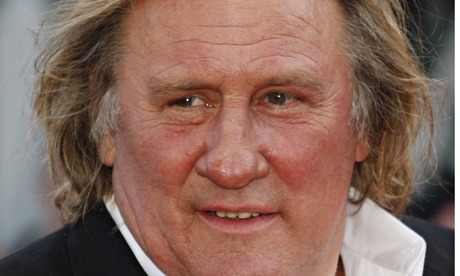
It is time for what the publishing world calls super Thursday: there’s an avalanche of books by celebrity authors yearning for Christmas bestsellerdom. And this means autobiographies, with memoirs by John Cleese, Kevin Pietersen and Roy Keane. Already we have had books by Lena Dunham and Stephen Fry, and there’s Gérard Depardieu’s autobiography It Happened Like That, in which he describes being a teenage rent boy and digging up bodies in a cemetery to steal jewellery.
This will trigger a revival of book reviewers’ strangest habit – that of solemnly calling certain passages “honest”. Or “searingly honest” or “unflinchingly honest”. But were these reviewers there? Were they there with Depardieu in the graveyard? Do they have actual independent knowledge of whatever the author is being so searingly and unflinchingly honest about? The “honest” pronouncement is meaningless, a faux-moral assessment, literary journalism’s equivalent of football commentators piously declaring that a certain team “deserved to lose” or, alternatively, “didn’t deserve to win”. So why do critics single out certain passages as “honest” despite being so obviously unqualified to judge? Well, because they have no reason to suspect actual dishonesty, and because these are the bits which appear to show the author in a sensationally bad or unflattering light, although these claims may simply be humblebrags.
All celebrities, all autobiographers, have in their pasts genuinely mortifying episodes that will never appear in any book. They are usually banal and intensely humiliating compromises in the early career stages. A friend of mine who works in television told me about a celebrated director who, in extreme youth, was approached late at night in a hotel corridor by a drunk producer who slurred: “If you give me a blow job, I’ll let you vision-mix the Horse Of The Year show.” Why do we expect “honesty” from celeb autobiographies anyway? Anthony Trollope, in the introduction to his autobiography, crisply announced he had no intention of providing anything of the sort: “That I, or any man, should tell everything of himself, I hold to be impossible. Who could endure to own the doing of a mean thing? Who is there that has done none?” That does sound honest.
Curb your queue-barging
Kate Fox, author of Watching the English, has made an interesting anthropological discovery. After studying CCTV footage of the 2011 riots, she has found that looters used the same body language as people queueing at Ascot – they politely waited their turn to steal stuff from shops once the window had been smashed. I have experience of waiting in queues at film festivals, and I resent the most insidious form of queue-barging: what Larry David in Curb Your Enthusiasm called the chat-and-cut. Someone will stroll past you as you are waiting in the queue, stop to chat with an acquaintance ahead of you and then sneakily join in the line. David boldly challenged the wrongdoer, but probably no one in the riots did. They just glowered at the queue-jumpers, and once they got into Foot Locker found there were no more trainers – and went “Tsk!”
It’s in the can
Being a parent of a 10-year-old is always liable to bring back memories of things you thought you had forgotten forever, or had come to believe never existed in the first place. As chilly autumn draws in, the latest one is the Harvest Festival. We have to find cans of tuna or custard to take into my son’s school. Memories of a strange, piled-up shrine of cans at my own school have swum traumatically back into my mind. And I now discover, to my atheist horror, that I can quaveringly sing the first verse of We Plough the Fields and Scatter, a tricky tune with big leaps from the low to high register. There’s a rousing version by the Northallerton Methodist church choir on YouTube.
