
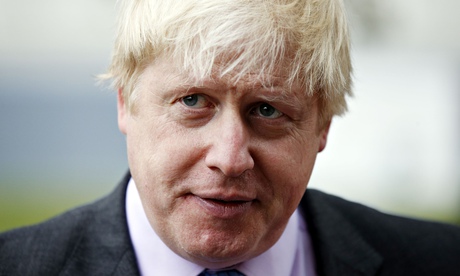
“It’s impossible to read this book without drawing fairly direct comparisons between its author and its subject,” noted Philip Hensher in the Spectator of Boris Johnson’s The Churchill Factor, calling it a “revival” of the “Plutarchan double life, which runs a wishful self-portrait of the author alongside a portrait of the subject”. Though writing in the weekly its author formerly edited, Hensher found the biography “negligible” as “a contribution to knowledge”, “written in something of a hurry” and interesting only when addressing Churchill’s literary style. Handed a possible poisoned chalice by being asked to review the book in the organ Johnson currently writes for, the Daily Telegraph, Con Coughlin unsurprisingly found things to praise: “there is a profound point underscoring all the levity and bravura”, he insisted, and the mayor of London’s “characteristically breathless romp” offers “high entertainment”. Reservations were signalled, though, by an aside on Johnson’s “distinctive writing style” (“it reads at times like a mixture of Monty Python and Horrible Histories”) and a guarded admission that “it can be difficult to see what new insights he brings”. The Evening Standard’s Dominic Sandbrook might have been expected to be inhibited in his judgments too, since the London paper is known for its adoring support for the mayor, but while he found it “engaging”, his review was largely damning: “It bears about as much relation to a history book as a Doctor Who episode does to a BBC4 documentary … Basically an extended riff about a charismatic showman often reviled by his contemporaries as reckless … Johnson has written a very short book all about himself, and called it The Churchill Factor”.
Most reviews of Russell Brand’s Revolution have been equally scornful. “The worst sort of chatterbox is the chatterbox who bores himself,” noted the Mail on Sunday’s Craig Brown. “Brand only seems able to issue a hundred-or-so words of pseudo-revolutionary blather before beginning to bore himself.” In the Observer, Nick Cohen agreed that “his writing is atrocious”, and went on to condemn Brand as “a religious narcissist” misguidedly translating his “Beverly Hills Buddhism” into a political credo. “Derisive laughter”, wrote the Sunday Times’s Christopher Hart, is the only possible response to “a vapid, ill-informed, coke-frazzled, self-adoring and grossly hypocritical celeb” crying that the world is unfair. Only the Independent’s Steve Richards found kinder words, praising Brand’s “compelling and authentic voice” and “refreshingly distinctive analysis”.
Marilynne Robinson’s Lila, in contrast, has met with admiring reviews differing only in degree of enthusiasm. The Daily Telegraph’s Sameer Rahim admired the novelist’s “alertness to the subtleties of human relationships” and “quiet epiphanies”, while conceding it was a “knotty work”. In the Mail on Sunday, Simon Shaw applauded Robinson’s exquisitely wrought prose” and found her “moral seriousness reminiscent of the great Victorian novelists”. Theo Tait, in the Sunday Times, felt it was “not quite as good as its predecessors” in Robinson’s sequence, but nevertheless rated it “extremely good”. In the Independent, Neel Mukherjee called it “a book that leaves the reader feeling what can only be called exaltation”, while, for the Observer’s Sophie Elmhirst, the Gilead novels “will surely be known in time as one of the great achievements of contemporary literature”.
