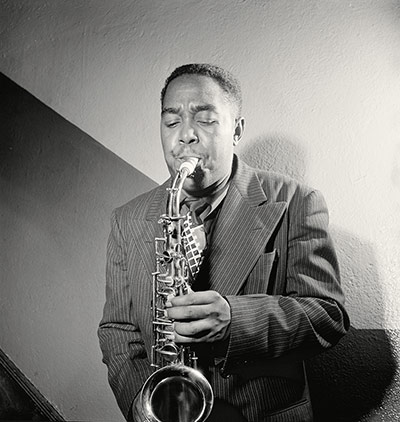
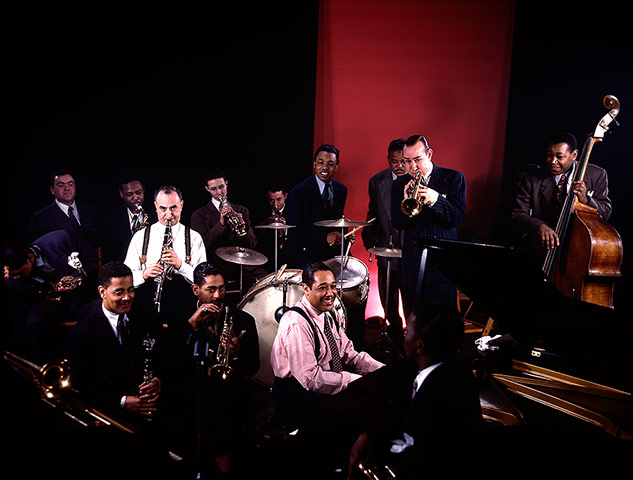
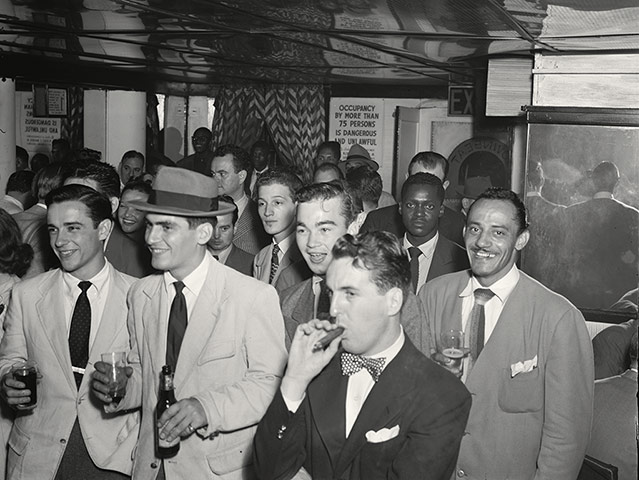
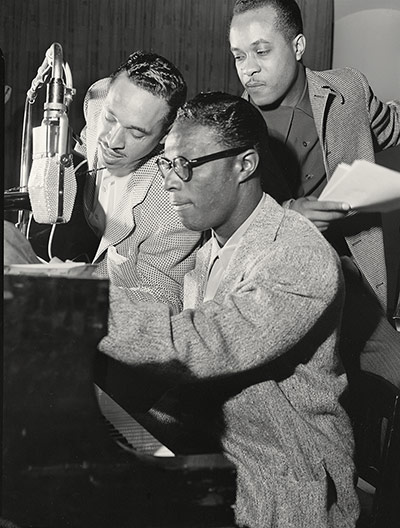
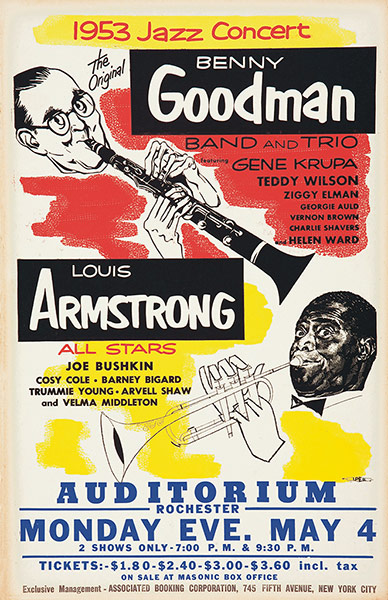
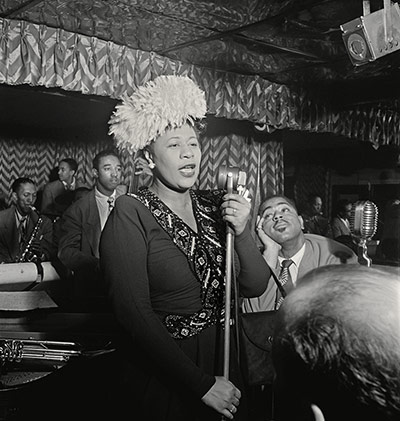
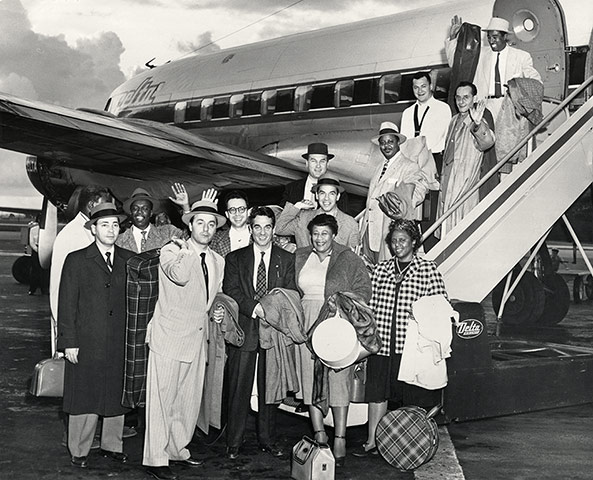
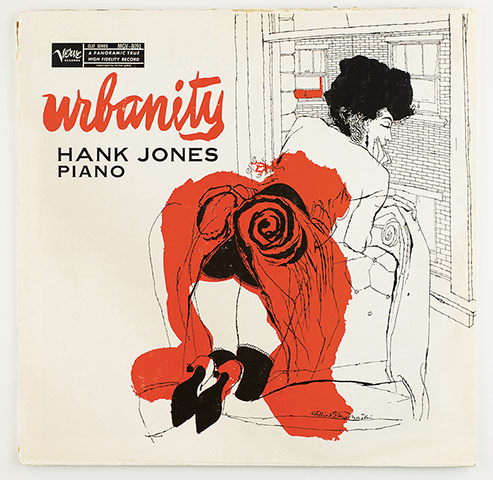
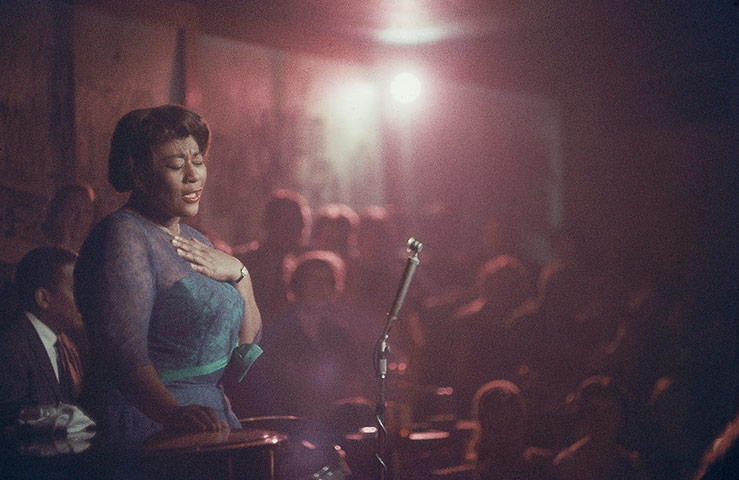
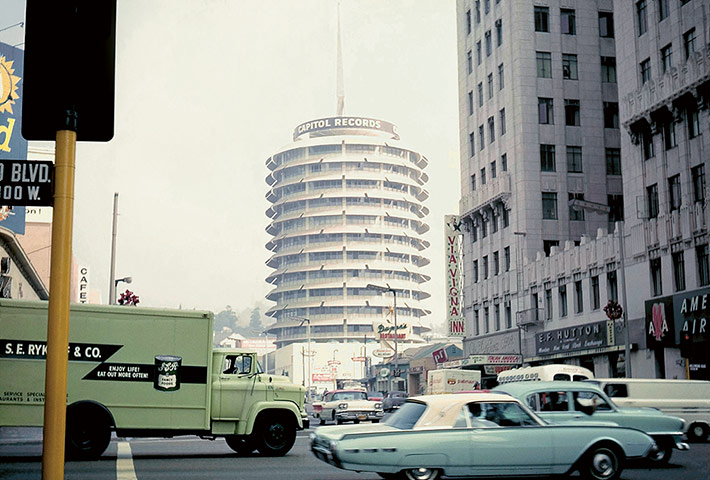
How Verve Records and Norman Granz revolutionised jazz – in pictures As a new photography book celebrates seminal jazz label Verve, Stuart Nicholson traces the legacy of its founder, Norman Granz Tweet Charlie Parker pictured rehearsing backstage at Carnegie Hall, New York, 1947. "Two extraordinary mavericks changed the face of jazz in the 1940s," says Stuart Nicholson. "Saxophonist Charlie Parker changed the way it was played and entrepreneur Norman Granz changed the way it was sold by taking it out of the smoky jazz clubs and putting it on the concert stage." Photograph: Library of Congress "Granz had become a jazz fan after hearing the Coleman Hawkins recording of Body and Soul and believed that jazz could be used as a means of breaking down racial segregation." A 1943 jam session at photographer Gjon Mili's studio loft. Duke Ellington is pictured at the piano surrounded by other jazz musicians, including Dizzy Gillespie (foreground, second left) on trumpet and behind him Mezz Mezzrow on clarinet Photograph: Gjon Mili/Time & Life /Getty Images "In 1944 Granz [pictured here, far right, with Lester Young, centre, signing autographs, probably in 1945] took the ambitious step of arranging a promotion at the Los Angeles Philharmonic. Borrowing money to record the show, a novel idea of presenting the spontaneity of a 'jam session' for mass audiences, the event was a sell-out and the concept of 'Jazz at the Philharmonic' was born. More monthly concerts followed, and then the show went out on the road." Photograph: Courtesy of Tad Hershorn Billie Holiday performing at the Downbeat Club, New York City, February 1947. "By 1946, the now annual JATP tour included some of the biggest names in jazz, including Charlie Parker, Coleman Hawkins, Buddy Rich, Lester Young and Billie Holiday." Photograph: Library of Congress Part of the audience seen inside the Downbeat Club, New York City, c1948 Photograph: Library of Congress The Nat King Cole Trio photographed in New York, July 1946. From left to right are guitarist Oscar Moore, Nat King Cole and bass player Wesley Price Photograph: Library of Congress A Benny Goodman and Louis Armstrong poster for a concert in 1953Photograph: Courtesy: Richard Havers Photograph: Verve Records Ella Fitzgerald, with Dizzy Gillespie seen on right gazing up at her and Ray Brown at the Downbeat, New York, September, 1947 Photograph: William P. Gottlieb/Library of Congress By 1952, Granz was touring his Jazz at the Philharmonic concerts, first held in Los Angeles in 1944, to great success. Here Jazz at the Philharmonic musicians Oscar Peterson, Gene Krupa, Buddy Rich, Barney Kessel, Ella Fitzgerald, Norman Granz, Flip Philips, Charlie Shavers, Ray Brown, Willie Smith and Lew Gilbert musicians arrive in Miami for an engagement at the Miami Beach Auditorium Photograph: Courtesy of Tad Hershorn "In 1955 Granz formed Verve Records to consolidate his recording activities under one label. It quickly became one of the best-known labels for both jazz and popular music." This cover of the LP Urbanity by Hank Jones, 1956, is just one of many groundbreaking covers highlighting Verve's use of illustration and design Photograph: © Universal Music Group Photograph: Verve Records Bathed in red light, Ella Fitzgerald performs at Mr Kelly's nightclub, Chicago, Illinois, 1958. By this point Norman Granz was Fitzgerald's manager and under his stewardship her career was flourishing Photograph: Yale Joel/Time & Life /Getty Images The Capitol Records and AA Airlines buildings on Sunset Boulevard in Hollywood in 1962. The Capitol studios, constructed in 1956, hosted some of the era's most important Verve sessions Photograph: Courtesy: Richard Havers Photograph: Verve Records