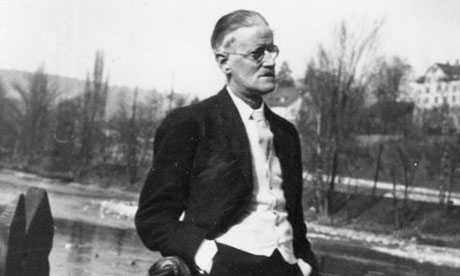
Bloomsday, celebrated on June 16 both in Ireland and around the world, is an annual commemoration of James Joyce and his novel Ulysses, which is set on that day in 1904. Radio 4 is devoting its whole day's schedules to it - a far cry from the novel's initial reception in 1922, when it was banned for obscenity in both the UK and the US.
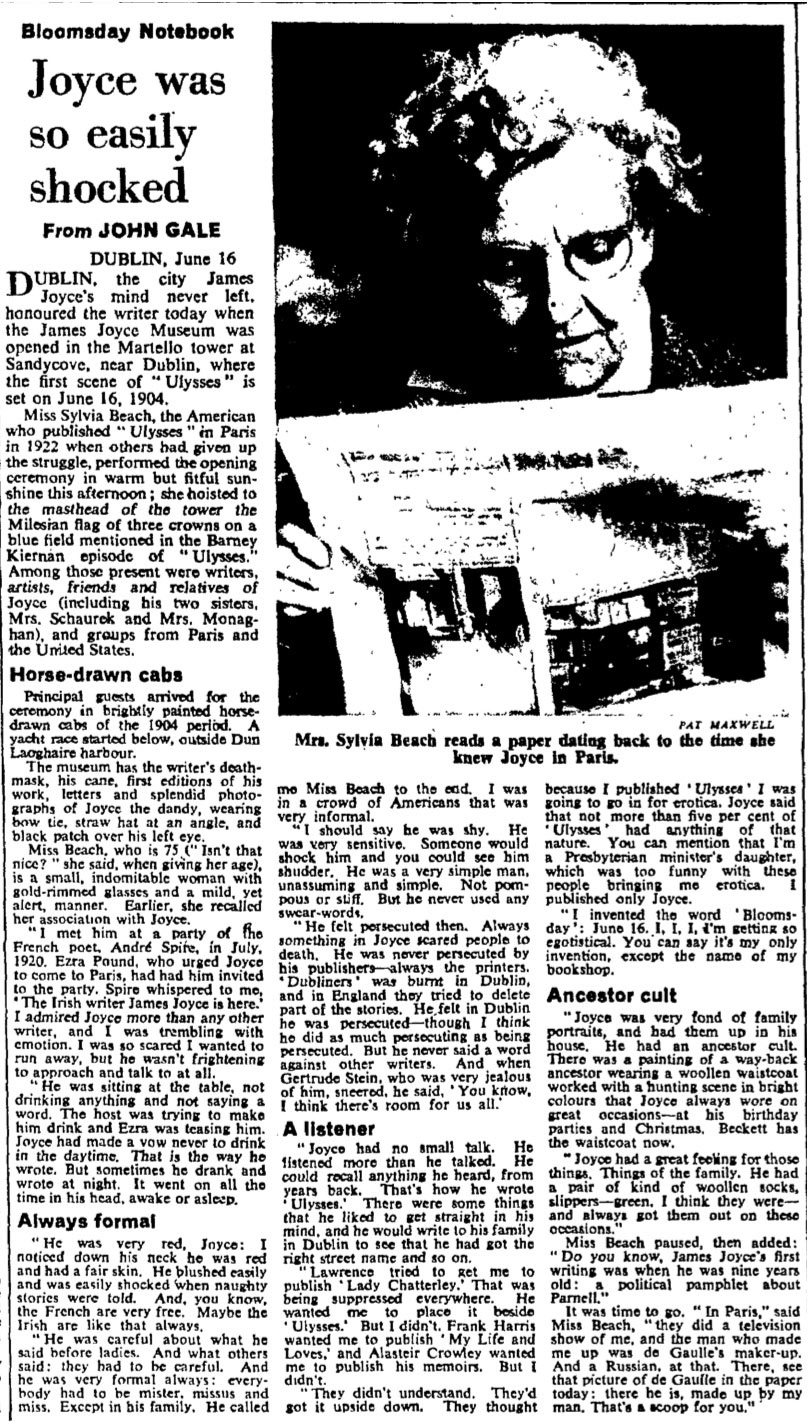
Sisley Huddleston, reviewing Ulysses for the Observer in 1922, called Joyce 'a man of genius,' yet he had to review a copy that was issued in France to subscribers only, by Shakespeare and Company, the bookshop owned by Sylvia Beach (who, incidentally, claimed in 1962 to have invented the word Bloomsday).
It was Joyce's attempt to capture the everything of existence that led to the charges of obscenity - as Huddleston writes, 'how can you show what life is' without it? Of Molly Bloom's famous soliloquy in the final chapter, Huddleston says it is 'the vilest, according to ordinary standards, in all literature. And yet its very obscenity is somehow beautiful.'
Ulysses was not freely available in Britain until 1936 - although prior to that, the Manchester Guardian had suggested a world tour of 'uncensored travels' for discerning literary fans who wished to seek out copies of Ulysses or D.H. Lawrence's Lady Chatterley's Lover.
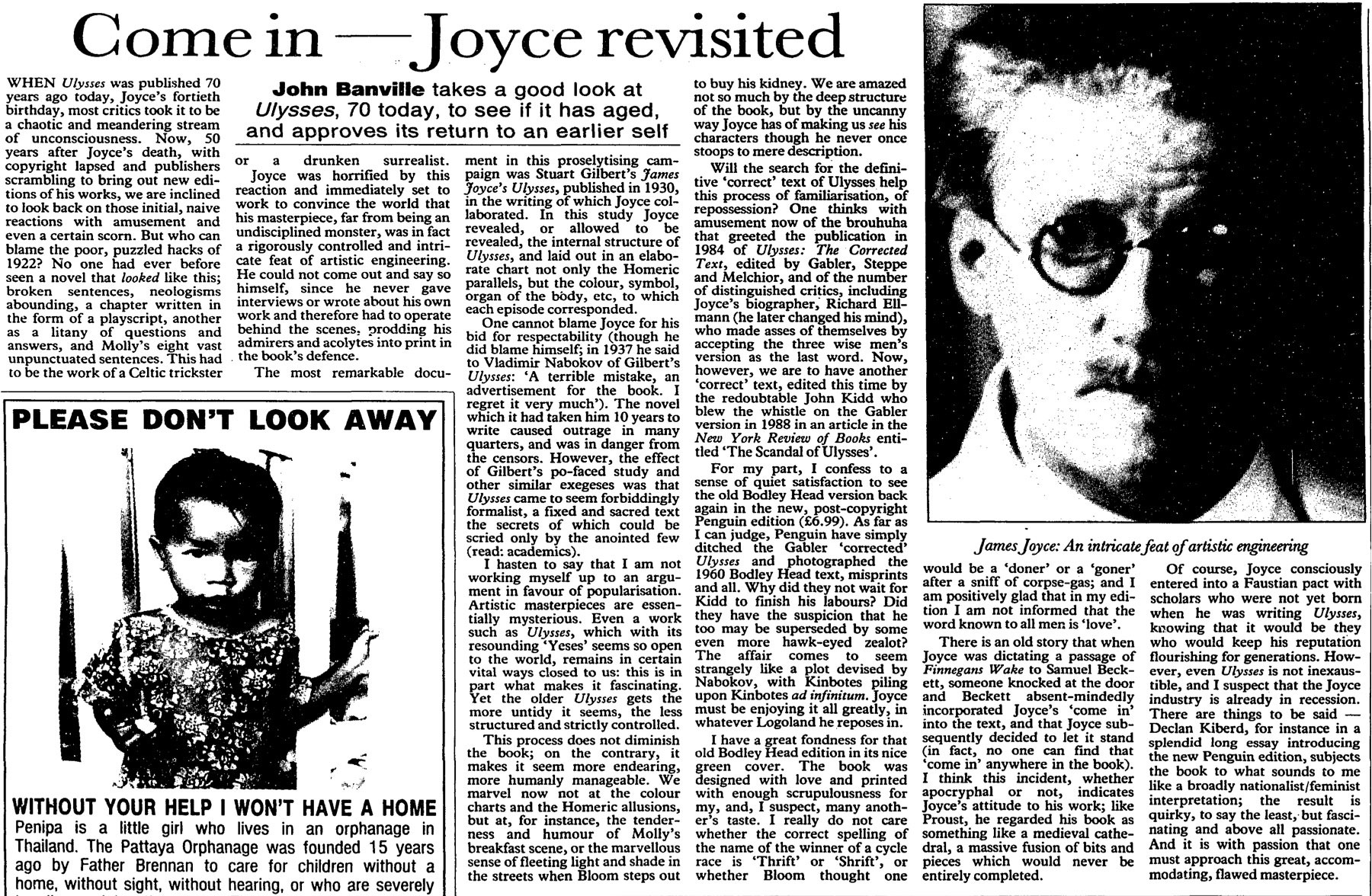
The lure of Ulysses did not fade over time. Anthony Burgess, writing the review above for the Observer in 1993, urged readers to 'be suffused with the Joycean incandescence.' John Banville, writing for the Observer a year earlier on the 70th anniversary of the publication of Ulysses, called the novel a 'great, accommodating, flawed masterpiece.'
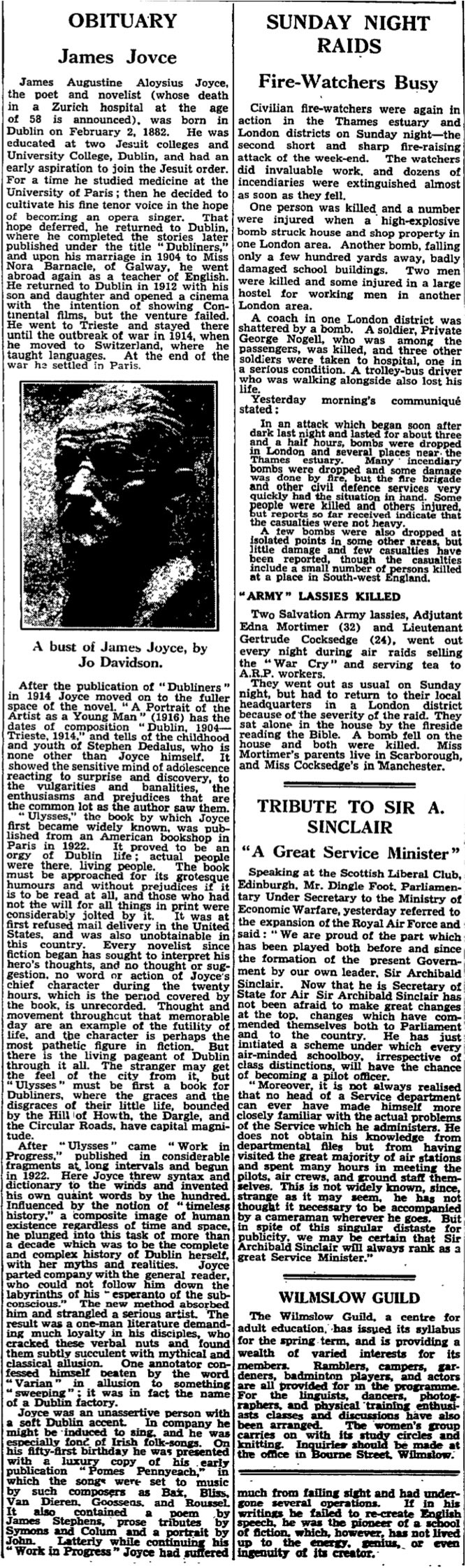
James Joyce died in 1941. In his obituary, the Manchester Guardian called him a "pioneer of a school of fiction," and recognised his "energy and...ingenuity." Ulysses had been his attempt to render a day in Dublin so precisely and truthfully that if Dublin were destroyed, this day could be recreated - and Bloomsday does just that, every year.