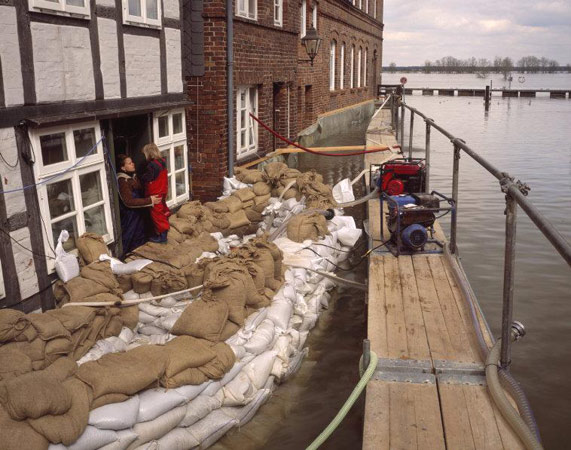
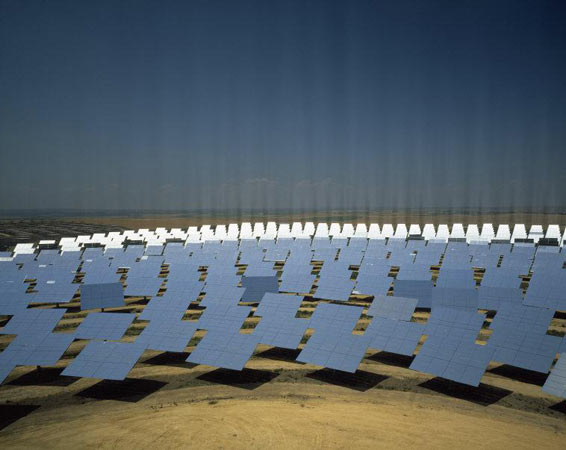
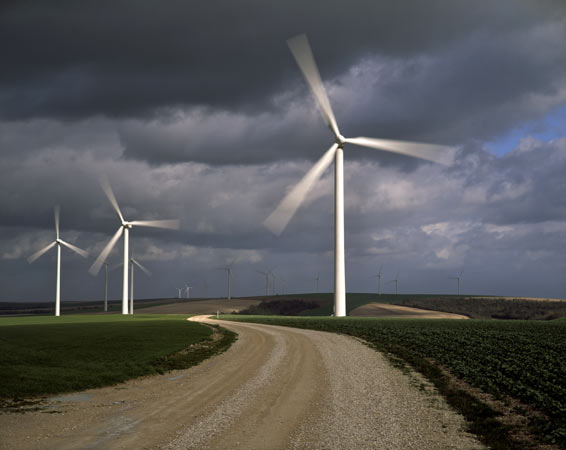
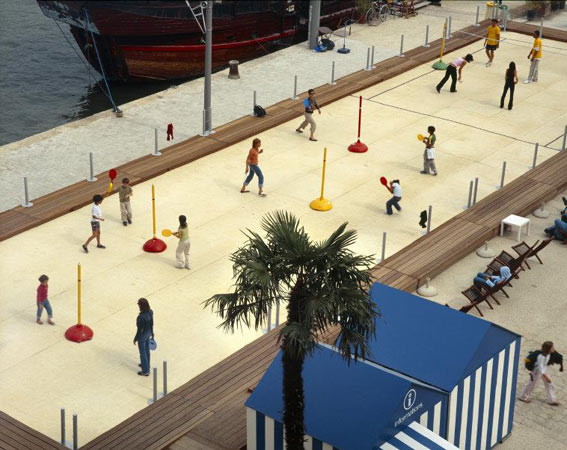
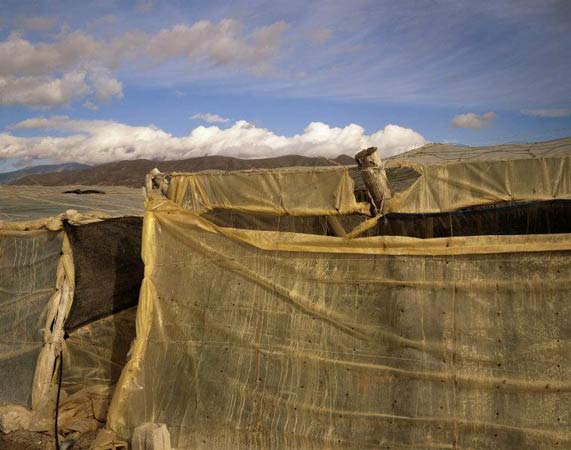
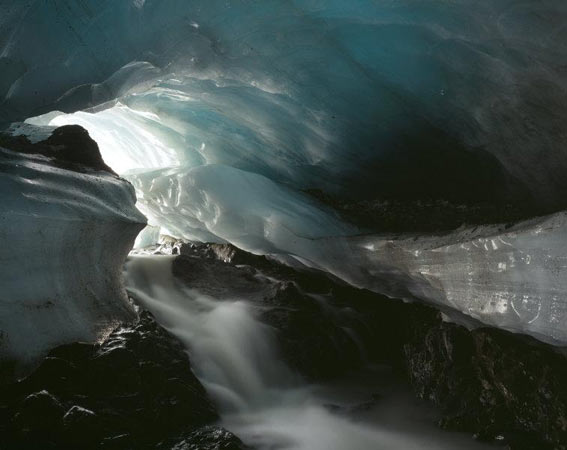
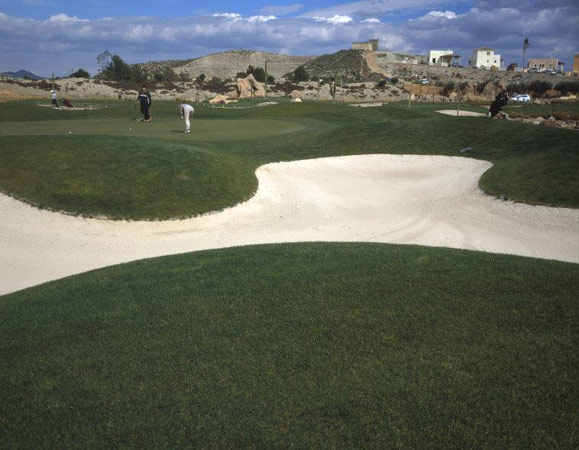
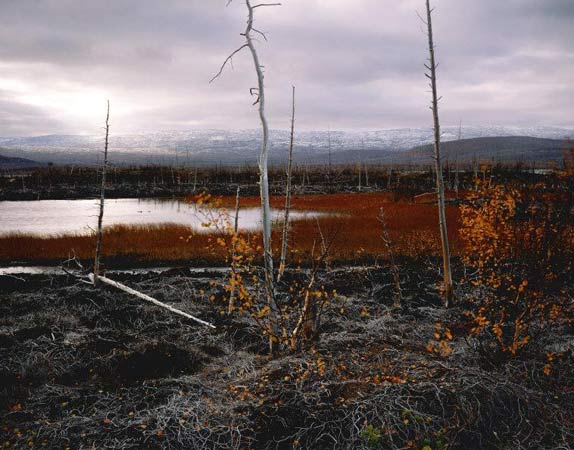
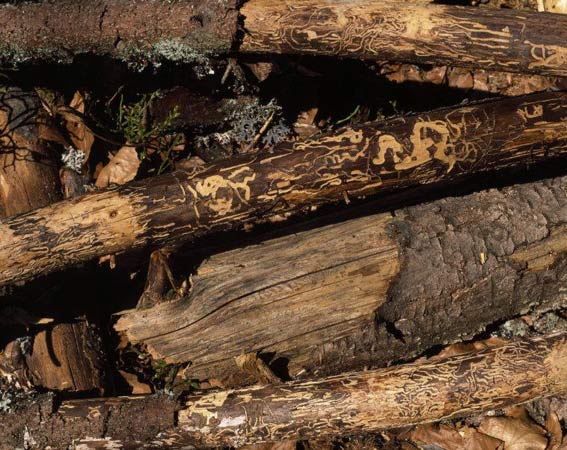
Highlights from Stuart Franklin’s Footprint: Our Landscape in Flux Highlights from photographer Stuart Franklin's book and exhibition Footprint: Our Landscape in Flux Tweet Stuart Franklin: 'To the ancient Greeks, Arcadia was a rural idyll. Instead of a lush, bucolic landscape, I found one devastated by the hunt for fossil fuels. Sixty per cent of Greece’s electricity is derived from lignite (brown coal). This involves bulldozing whole landscapes to feed the nearby power station. In Megalopolis I found Greece’s second largest lignite mine. The village of Anthohori in Arcadia was wiped off the map - the church of Santa Maria was all that remained' Photograph: © Stuart Franklin 'The Elbe river, which rises in the Czech mountains and flows mostly through Germany, has achieved notoriety in two different ways. First, its legacy of pollution is over: this is celebrated now by mass bathing. Second, severe flooding in 2002 and 2006 has left the populations of riverside towns wondering when the next catastrophe will strike' Photograph: © Stuart Franklin 'In the arid landscape of Andalucia lies Europe’s first commercially operated solar thermal plant. Six hundred giant mirrors direct the sun’s rays on to water pipes, creating steam that drives turbines to create electricity. The eventual aim is to fulfill the energy needs of Seville. Renewable energy is beginning to make a significant impact and may help us to reduce our dependence on fossil fuels' Photograph: © Stuart Franklin 'An increasingly ubiquitous sight in Europe is the wind generator. Are they useful? Are they a blot on the landscape? To the first question I would say yes. The European wind energy industry believes that, given the right political climate, 50 million people in Europe (that will be about a tenth of the population) will have their energy needs met by wind power. To the second question my answer is no. Wind farms convey a sculptural symbol of optimism. Also, they won’t be with us forever' Photograph: © Stuart Franklin 'I set out to document changing lifestyles in several European cities where the mean or maximum summer temperature has increased by two degrees centigrade or more since the 1970s. All the pictures were taken in the summer. This photograph, from Paris Plage, shows people playing patball on the banks of the Seine. Other images in the series show the Caribbean beach bar culture in Berlin, the near-empty streets of Madrid, and Independence Square in Kiev' Photograph: © Stuart Franklin 'The Footprint project began in the plastic-covered horticultural landscapes of Andalucia. I visited the region in 2004 to illustrate a Guardian article by Felicity Lawrence and returned in 2005 and 2006 to document various European examples of farming under plastic. This photograph is from Adra, Andalucia. I moved in close enough to see the pesticide streaks running down the sides of the greenhouse' Photograph: © Stuart Franklin 'Glaciers are retreating in Europe as rapidly as they are disappearing in the Himalayas or the Andes. Most people just think this means the surface area is reducing. However, in this project I climbed under the Gurgler glacier in Austria to find rivers of meltwater and ice caves where the glacier is thinning as well as retreating. I photographed glaciers in Spitzbergen, Austria, Switzerland and France' Photograph: © Stuart Franklin 'I photographed the artificial landscape of golf in Andalucia and Murcia in southern Spain. It’s a landscape linked to the phenomenon of international retirement migration. The region is already arid and its aridity is set to increase with climate change. Water is so scarce it is now being diverted from the northern Ebro river. In dry years the local boreholes are not replenished. A golfing landscape must always be green' Photograph: © Stuart Franklin 'In Monchegorsk, a few hours' south of Murmansk in the Kola peninsula, there’s very little vegetation still alive. In 1964 Rachel Carsen wrote Silent Spring, documenting the terrible impact of the pesticide DDT as it liquefies. Here it’s silent autumn. Some life, some autumn leaves, bring hope in a land of devastation. The cause of the pollution is a nickel smelter in the town, which emits a highly acidic and sulphurous byproduct – lethal to the fragile taiga' Photograph: © Stuart Franklin 'Although Europe’s forest matrix is increasing, there have been considerable changes to the forest landscape. In southern Europe, fierce fires have altered the landscape. In the north - in Germany Poland, Czech Republic - individual tree species are responding to climate change by tracking north as the temperature warms. One is the Norway spruce. This picture shows the spruce dying off in the Bavarian forest from a mixture of acid rain and global warming' Photograph: © Stuart Franklin