
The following correction was printed in the Observer's For the record column, Sunday October 22 2006
In the review below, we suggested that Zac Goldsmith had lied to friends and guests to raise money for the Conservative party. This was completely false. We accept that money raised by the recent charity poker event will go towards work on environmental causes and the Shane Warne Foundation. We apologise unreservedly to Mr Goldsmith.
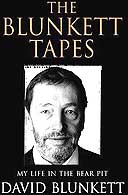
The Blunkett Tapes: My Life in the Bear Pit
by David Blunkett
Bloomsbury £25, pp872
What follows is a prejudiced review - prejudiced not against the author of The Blunkett Tapes but against the genre of which the book is a salutary example. Published diaries are usually a betrayal, since they reveal the contents of conversations which were thought to be confidential. And they are almost invariably attempts either to enhance - or, in the case of fallen idols, rehabilitate - the reputation of the diarist. On the first charge, David Blunkett must be found not guilty. The diaries contain a couple of sideswipes at Jack Straw and John Prescott for daring, in what they believed to be private discussions, to question Blunkett's conduct. But apart from an unlikely story about the Prime Minister seriously considering sacking Gordon Brown, there are virtually no indiscretions which can be regarded as a breach of trust - though Dawn Primarolo may not be happy to know that Blunkett incorrectly anticipated her sacking. The absence of damaging indiscretions is to be applauded. But it is less the result of proper reticence than a consequence of his diaries' character. They are essentially personal rather than political. Their clear purpose, money aside, is to explain and therefore excuse. It is difficult to believe that they will have that result.
Every public mistake, no matter how trivial, is painfully regurgitated, and the descriptions are invariably preludes to confessions and pleas for absolution. An appearance on Celebrity Mastermind, which would have been best forgotten, is glorified with the question: 'If I make a fool of myself, what does it matter? The most important thing is that it means a £2,500 donation to the Sheffield Hospice.' The result of Blunkett's self-absorption is therefore both a disappointment and a relief. The only damage the diaries will do the government is the creation of the impression that ministers are far more vainglorious than is, in most instances, the case. But the reader learns little or nothing about 'what really went on' when great issues were at stake.
Diaries which are advertised as laying political life bare are almost always a confidence trick played on the gullible public. The implication of their publication, stated overtly when they are serialised in newspapers, is that they reveal the raw, red meat of immediate emotion, the feelings which, for better or for worse, architects of vital decisions experience in moments of triumph and disaster. Even if the authors make what, at the time of writing, they believed to be honest entries, careful editing always follows. The Blunkett text leaves little doubt the original material has been 'improved'.
Bunkett's second resignation from the cabinet followed allegations that he had not declared, in exactly the manner required, his financial interest in DNA Bioscience, a company with which the government did business. The story broke in October 2005 and Blunkett resigned on 2 November. His diary entry for 18 May that year, immediately after he rejoined the government and six months before he was again forced out, reads: 'I did the normal declaration of interest with Sir Richard Mottram (the permanent secretary). I have already made the basic declaration on the evening of May 6 including the trust for the shareholding in DNA Bioscience.' To me that reads like a retrospective explanation of the error which he claimed, probably correctly, was an honest mistake. Why on earth should he have chosen to remind his diary of what he had done 12 days earlier? And why, if the entries recorded events as they happened is so much described in the past tense?
It would be quite extraordinary if a man, contemplating the wreckage of a once great career, did not try to put the best possible gloss on the years of glory behind him. So perhaps we should not complain that Blunkett is the hero of the political entries in his diary. He is wise. As early as 7 October 2001 he warned that the Afghan intervention would drag on 'because there was (sic) no coordinated strategy between the United States and Britain'. He is loyal. Despite his doubts about the Afghan campaign he urged colleagues to support Tony Blair's 'clear vision of the way ahead'. He is brave. On 7 March 2002 he asked the Prime Minister: 'Why aren't you doing something about the Middle East and the Palestine-Israel conflict? Why are you backing the Americans?' And he is influential. By 13 March, 'Tony's work on Palestine yielded fruit. This does make a difference to Tony's position which looked disastrous at the beginning of the week. Now we must all strengthen his arm.' David Blunkett was always on the side of political virtue.
All that being said, it has to be admitted that when the Blunkett tapes turn to private matters the author spares himself very little embarrassing exposure. Indeed, fastidious people will argue that he spares neither himself - nor the reader who is not motivated by prurience - anything like enough. Having made the wholly legitimate claim that he is entitled to keep his private life private, he goes into detail after uninhibited detail about those parts of his personal conduct which he wants to be better understood. Excursions to Annabelle's nightclub, like his apparently platonic liaison with Sally Anderson, would not be worth a mention had Blunkett not chosen to deal with them himself. As it is, the only necessary comment is that his treatment of his private life confirms that he has never been held back by emotional inhibitions.
We learn that, under pressure of work and the strain imposed by a tempestuous personal life, he felt 'the world opening up' beneath him. It would be a harder heart than mine which did not feel pity for the pathetic figure that the diary so graphically described. But is pity what he wants? Should not pride alone - putting aside ambition - have encouraged him to keep the moments of black despair to himself? Blunkett is what is called a 'modern man'. That is clear from the frequency with which he hugs those around him. He is not embarrassed about describing his innermost feelings. There will be many previously sympathetic people who are embarrassed by reading about them.
However, the diaries suggest that David Blunkett believes that by confessing and accepting his mistakes, he will be exculpated - most of his sins being more venial than mortal, so that forgiveness is hardly necessary. He certainly has a nice line in the apology which is, in reality, a plea for sympathy and understanding. On
9 October 2005 he wrote: 'If I could turn the clock back ... I would run a mile from DNA Bioscience and suppers with Sally Anderson. How can so small a mistake have led to so much?' One of the reasons that he paid so heavy a price was the penalty of hubris. He did not grasp the fact that his comparatively trivial mistakes were compounded by his self-righteous attitude. Not surprisingly, his fall from grace produced the greatest outburst of cabinet Schadenfreude in modern times. On the evidence of The Blunkett Tapes he has still not got the message.
The only justification for the publication of political diaries is the power which they might possess to instruct the general public about the way in which government works. That was the avowed intention of Dick Crossman who began the fashion, and it has been echoed by the other diarists who have followed in his footsteps. No doubt Blunkett will claim the same. But the tapes tell us little we did not know: Gordon Brown is a tough and sometimes cantankerous Chancellor of the Exchequer; most of the Cabinet would have dumped the Millennium Dome but the Prime Minister insisted that it go ahead; Alastair Campbell leaks convenient news to favoured newspapers in the hope of deflecting them from publishing damaging revelations. The Blunkett Tapes are not about government. They are about David Blunkett.
One man and his dogs
Born: 6 June 1947, Sheffield.
Education: Schools for the blind in Sheffield and Shrewsbury, and the University of Sheffield.
Political career: Elected to Sheffield City Council in 1970 at the age of 22, becoming the youngest ever councillor. 1987 Elected Member of Parliament for Sheffield Brightside. 1997-2001 Education Secretary. 2001-2004 Home Secretary (resigned). 2005 Secretary of State for Work and Pensions (resigned).
Hounded: Blunkett's guide dogs have been frequent sources of humour in Westminster. Perhaps the most memorable occasion was when Lucy vomited in Parliament during a speech by her master's Conservative opposite number, David Willetts.
Infamy: Blunkett's private life has provided material for one play (Who's the Daddy?), one TV film (A Very Social Secretary) and two musicals (Blunkett - The Musical and the first episode of Radio 4's A 15-Minute Musical).
