
The current revival of interest in Karl Goldmark's Violin Concerto is puzzling. In his day, Goldmark was a popular figure among the 19th-century Viennese establishment, his best-known work being the opera The Queen of Sheba, first performed in 1875. The Concerto dates from two years later. It has great charm, though it attains neither the intensity nor the profundity of the greatest works in the form.
Goldmark does, however, introduce some novel structural ideas. The soloist never gets to play the opening theme of the first movement, a foursquare march flung out by the orchestra, though it is integral to the music's development, appearing as a climactic orchestral fugue leading to the first cadenza. The solo writing, meanwhile, is inherently vocal, a series of extended instrumental arias accompanied by the orchestra rather than integrated with it as a dramatic totality.
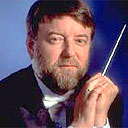
Popular with virtuosos around the turn of the 20th century, the piece slipped from view until the current generation of violinists began to champion it. Among them is Sarah Chang, who performed it with the London Symphony Orchestra under Andrew Davis. It formed a fine case for the lyricism of Chang's playing and allowed us to appreciate the extraordinary fullness of her tone. Davis conducted the piece with a touch of cool and exposed its inherent sugariness by flanking it with Stravinsky's Quatre Etudes and Prokofiev's Fifth Symphony.
Both works are based on previously existing material. Stravinsky's Etudes, first performed in 1930, are orchestrations of earlier chamber works, and Davis could not prevent them sounding like off-cuts from Petrushka and The Rite of Spring. Prokofiev's Fifth reworks jettisoned sketches from Romeo and Juliet. Davis's version was raw, visceral and exciting, though he didn't quite have the measure of the architecture of the first movement, which proceeded by fits and starts rather than as a single sweeping arc. Davis conducts the LSO comparatively rarely and doesn't quite have the rapport with them as he does with other ensembles.
