
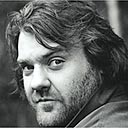
"I know a good doctor in London," Bryn Terfel remarked, breaking off his performance of Vaughan Williams's Songs of Travel in an attempt to deal with the audience's protracted fits of coughing. It was one of several moments in his recital when the Welsh bass-baritone tried to teach his public to behave by engaging in repartee.
He opened with a sequence of Schubert's Lieder to texts by Goethe. Spontaneous applause followed the first, a thrilling if slightly overemphatic account of An Schwager Kronos. Terfel politely asked everyone to refrain from clapping until the songs were over. The coughing continued, meanwhile, and when it came to the encore, he accosted the perpetrators again. Since the audience had done so much throat-clearing, he announced, it was time for them to sing. He kicked off The Hippopotamus Song, and soon everyone was roaring through "mud, mud, glorious mud".
Given Terfel's ability to turn a tricky situation into a positive one, it's not surprising he is so well-loved, though there are drawbacks to his approach. The mood of solitary resignation, carefully established at the opening of Vaughan Williams's song cycle, was inevitably broken by the interruption - though it's a measure of Terfel's stature that he was able to re-establish it quickly. I also wondered whether the applause during the Goethe Lieder put him off his stride, since a certain fussiness characterised his delivery.
It wasn't until after the interval that we got the best of Terfel, in a sequence of romantic yet bitter Shakespeare settings by Roger Quilter, and a group of Copland's Old American Songs, at once tender and funny. These eclipsed the focal point of the recital's second half, the UK premiere of The Moon Is a Mirror, by the American composer Jake Heggie. The cycle, a series of monologues addressed to the moon, exploits the principle characteristics of Terfel's singing: vocal beauty, spontaneity, his ability to express wide-eyed naivety and gentle humour without sentimentality.
Heggie's inspiration is markedly uneven, though the fourth song, What the Forester Said, is outstanding. A brief, sad nocturne, it consists of a tranquil monody underpinned by a wistful, slow waltz. Terfel and his pianist Malcolm Martineau held the audience spellbound with it. Even the coughers were briefly silenced.
